

Elevators are essential for safe and efficient movement within modern buildings. With increasing usage, ensuring their safety, reliability, and compliance is critical. Third-party lift inspection plays a key role in achieving this by providing an independent and unbiased evaluation of elevator systems.
Understanding Third-Party Lift Inspection
Third-party lift inspection is a detailed assessment of an elevator conducted by an independent organization that is not involved in its installation or maintenance.
Unlike routine servicing, these inspections focus purely on:
Safety and risk identification
Compliance with applicable standards
Performance and operational reliability
The goal is to ensure that the lift is safe for users and functioning as intended without hidden defects.
Why is Third-Party Inspection Important?
While regular maintenance is necessary, it may not always provide a complete or neutral assessment. Third-party inspections add an extra layer of safety by offering an objective review.
Key reasons include:
Identifying issues missed during routine maintenance
Ensuring unbiased evaluation of lift systems
Verifying compliance with safety regulations
Reducing the risk of accidents and breakdowns
Improving trust among residents and users
Key Areas Covered in Lift Inspection
A comprehensive inspection evaluates all major components of the elevator:
Mechanical Systems
Includes checking of traction machines, brakes, ropes, pulleys, and guide rails.
Electrical and Control Systems
Assessment of control panels, wiring, safety circuits, and backup systems.
Door Safety Mechanisms
Inspection of door sensors, interlocks, and proper alignment.
Safety Devices
Verification of overspeed governors, emergency brakes, and alarm systems.
Ride Quality
Evaluation of smoothness, vibration, and accurate leveling at floors.
Emergency Systems
Checking alarm communication, rescue procedures, and power backup.
Common Issues Found During Inspections
Third-party inspections often uncover hidden problems such as:
Worn-out or aging components
Faulty door sensors or interlocks
Poor maintenance practices
Non-functional safety systems
Missing documentation
Delayed upgrades in older lifts
Addressing these issues early helps prevent failures and ensures safer operation.
Benefits of Third-Party Lift Inspection
Enhanced Safety
Early detection of risks minimizes chances of accidents.
Transparency
Independent reports provide a clear view of lift condition.
Compliance Assurance
Helps meet regulatory requirements and avoid penalties.
Cost Efficiency
Preventive identification of faults reduces major repair costs.
Longer Equipment Life
Timely maintenance and corrections extend the lifespan of lifts.
NLETA’s Approach
NLETA promotes a structured and standardized inspection framework that includes:
Detailed inspection checklists
Risk-based safety assessments
Clear and actionable reporting
Regular inspection scheduling
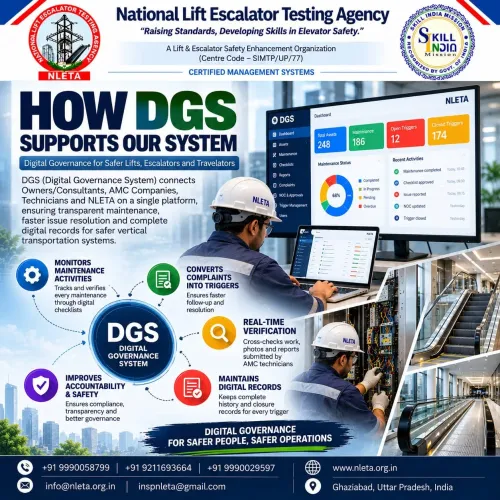
Monitoring of compliance and maintenance records
This approach ensures consistency and long-term improvement in elevator safety.
Best Practices for Implementation
Building owners and facility managers should:
Schedule inspections regularly
Maintain proper documentation
Act quickly on identified risks
Integrate findings into maintenance plans
Train staff on safety procedures
Conclusion
Third-party lift inspection is a critical part of modern elevator safety management. It provides an independent evaluation that enhances safety, ensures compliance, and improves overall performance.
With structured practices and guidance from NLETA, organizations can move toward proactive maintenance and create a safer environment for all elevator users.